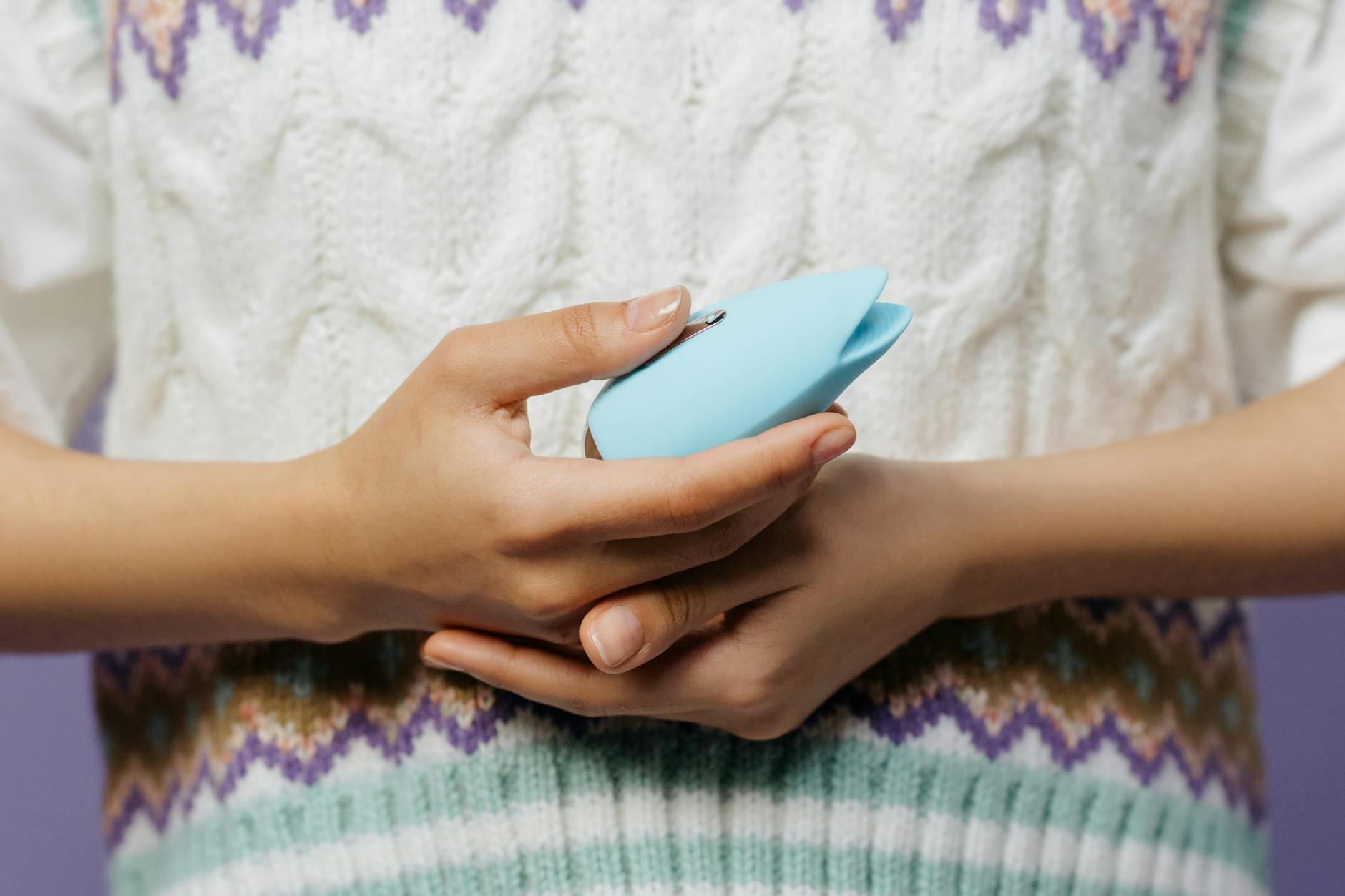
How Lemon Vibrators Feel Different When You Have a New Partner
Pleasure changes when trust is new. Here's what to expect, how to communicate what you need, and why the right lemon clitoral vibrator matters more than you think.
When you bring a lemon vibrator into a new relationship, something unexpected happens. It doesn't feel the same as it did solo. Your body responds differently. Your mind is somewhere else. The pleasure that felt straightforward alone suddenly gets tangled up with vulnerability, timing, and the very real question of whether this person will understand what you're doing and why.
That's not a problem. It's just the actual experience of introducing pleasure toys when the relationship is still new enough that trust is something you're building, not something you take for granted.
There are three physiological reasons for this, and none of them mean you're doing anything wrong.
First, arousal requires a baseline of safety that takes time to develop. Your nervous system doesn't know yet if this person is truly safe, even if your brain believes it. When you use a lemon vibrator solo, your body knows exactly what's coming. With a partner watching, touching, or participating, your parasympathetic nervous system has to do extra processing. This isn't a bad thing. It just means the pathway to arousal takes longer and requires more deliberate focus.
Second, novelty changes sensation. Your clitoris responds to new stimulation patterns differently than to familiar ones. If you've been using a vibrator solo for months or years, your body has adapted to how it feels, what rhythm works, what intensity gets you there. A new partner introduces variables. Their touch, their timing, the fact that you're hyper aware of being watched rather than being alone. These aren't obstacles. They're just new data your nervous system is processing in real time.
Third, desire operates differently in couples. Solo pleasure is straightforward. You know what you want and you take it. With a partner, even a wonderful partner, there's negotiation happening beneath the surface. Are they comfortable with this? Do I seem too eager, too knowledgeable, too confident about my own pleasure? Should I guide them or let them figure it out? That mental load reduces arousal capacity, even when you intellectually know you're safe.
Introducing a lemon vibrator to a new partner isn't just a logistical question. It's existential. You're saying: I have a body that knows what it wants. I have preferences. I have a history of pleasure that doesn't include this person.
For some partners, that's incredibly hot. For others, there's an adjustment period where they wonder if it means you need something they can't provide. (Spoiler: it means you need stimulation that neither of you can provide alone. It's not about insufficiency. It's about physics.)
The most common dynamic I see is this. Someone brings out a lemon vibrator, and their partner either enthusiastically helps or goes quiet. The quiet ones are usually wrestling with something invisible. Maybe insecurity. Maybe they just need the conversation to shift from doing to understanding.
Here's what changes everything: naming it out loud. Not during sex. Before. "I've been using this vibrator, and I really like it. I'd love to explore using it with you sometimes, but I also want to know how that feels for you." That single sentence moves you from secret to shared intention.
Timing matters more than people admit. If you've been with someone for three weeks, introducing a lemon vibrator might feel premature for them even if it feels natural for you. If you've been together for six months and still haven't mentioned solo pleasure, that's a different kind of conversation.
The sweet spot is after you've had real conversations about pleasure but before you're in the moment trying to figure it out together. Honestly though, there's no perfect timing. There's just honest timing.
Start with the simplest version of the truth. "I want you to know I use a vibrator sometimes." Wait for their response. Don't explain or justify. Explanation makes it defensive. You're not defending your pleasure. You're stating facts.
If they ask questions, answer them directly. "Do you want me to use it with you?" Yes, sometimes. "Do you feel like I need it because you're not enough?" No. I'd want it whether I was with you or alone. This isn't about you. It's about what my body likes.
Then, when you're ready to actually use it together, have one more small conversation. Not a speech. Just clarity. "I'd like to try this together. I'll show you what feels good. You can participate however feels right to you." Some partners love watching. Some love helping. Some love using it on you. All of that is fine.
This is the part nobody talks about clearly. When you're alone with a lemon vibrator, you can zone in completely. Your only job is to follow sensation. With a partner, you're doing two things at once. You're feeling the vibration. You're also aware of them. Your attention is split.
This often means orgasm takes longer. Your brain has to choose between novelty (new partner, new dynamic) and familiarity (known vibrator, known patterns). That friction is real. Some people need 5 minutes solo. They need 15 minutes with a partner in the room. That's normal.
What also changes is the quality of the orgasm. Solo orgasms can be intensely physical. Orgasms with a partner present often have an emotional component. You're not just feeling pleasure. You're feeling witnessed. That changes the neurochemistry slightly. The orgasm might feel less sharp and more diffuse. It might feel more complex. Neither version is better. They're just different.
Here's where a lot of couples get stuck. They think that using a lemon vibrator together means every sexual encounter needs to involve it. Or they think that if one person brings it out, the other has to participate. Neither is true.
The healthiest dynamic I see is this: the vibrator is available and optional. Sometimes you use it solo. Sometimes you use it together. Sometimes you don't use it at all. The fact that it exists and everyone knows it exists removes all the secrecy and shame. Then pleasure becomes just a choice you make together in the moment, not a big production.
With new partners, this often means the vibrator stays visible. You're not hiding it. You're not making a thing out of it. It's just there, same as lube or condoms. That normalization does incredible work on the relationship's ability to talk openly about pleasure.
There are specific moments where introducing a lemon clitoral vibrator genuinely deepens new relationships. When you've had a vulnerability conversation and want to show that you trust them with your body and your preferences. When you're both feeling disconnected and want to rebuild physical intensity. When you want to explore together without the pressure of penis in vagina sex feeling like the only "real" thing.
Some couples also find that using a lemon vibrator together earlier takes pressure off everything else. If you know that orgasm is achievable through the vibrator, there's less performance anxiety around other kinds of touch. That paradoxically makes everything feel more relaxed and more pleasurable.
It's not about the vibrator itself. It's about pleasure preferences more broadly. What turns you on. What you're curious about. What feels non negotiable and what's flexible. A lemon vibrator just happens to be the conversation starter.
When you use one together and it goes well, it's because you've both decided that your pleasure matters equally. That's the real shift. The vibrator is just the evidence.
You'll probably need to have this conversation, and it's worth having directly. The core truth is this: a vibrator isn't about them. It's about anatomical capacity. A vibrator produces sensations that a human hand or mouth cannot produce. Using one isn't a referendum on your partner's skill or attractiveness. Many couples find that naming this explicitly eliminates the insecurity. A simple framework: "I love how you touch me. I also like this vibrator because it does something specific my body responds to. Both things can be true."
There's no universal answer, but I usually suggest waiting until you're comfortable being naked together without performance pressure. If you're still nervous about being seen, the vibrator will amplify that nervousness. If you're past that initial vulnerability, you're probably ready. That's often around 3-4 months, but it depends on how quickly emotional intimacy develops.
Start with them using it on you. That keeps the power dynamic clear. You're giving them control over your pleasure, which is incredibly intimate and builds trust. Once that feels comfortable and good, you can explore the reverse. Some couples find they like it both ways. Some couples discover one direction feels better. Both outcomes are fine.
You can absolutely say no in the moment. "I'd like to use this solo first" or "Let's talk about it tomorrow" are both complete sentences. The vibrator doesn't create an obligation. You get to set the pace for how quickly you're combining it with partnered sex.
Not at all. Some couples use vibrators from the beginning. Some couples never use them and have incredible sex. Adding a vibrator to partnered sex is a choice about pleasure amplification, not a diagnosis of something missing. Think of it like spice. Your relationship's baseline sex is the meal. The vibrator is seasoning. Nice to have, but not necessary.
Don't ask permission. Share information and invite participation. "I use a vibrator sometimes, and I'm curious if you'd ever want to explore that together" is fundamentally different from "Is it okay if I use a vibrator?" The first is a confident statement. The second is a request for approval. You don't need approval for your pleasure. You just need communication about whether it's something you want to share.
A new relationship and a lemon vibrator can coexist beautifully if you're willing to talk about both. Your pleasure matters. Their comfort matters. These things don't have to be in opposition. Usually they're just in conversation, waiting for you to bridge the gap with honesty and a little bit of patience as you both figure out what feels good.
If you need help thinking through how to start that conversation, or if you have questions about anything in this piece, reach out anytime. That's what we're here for.