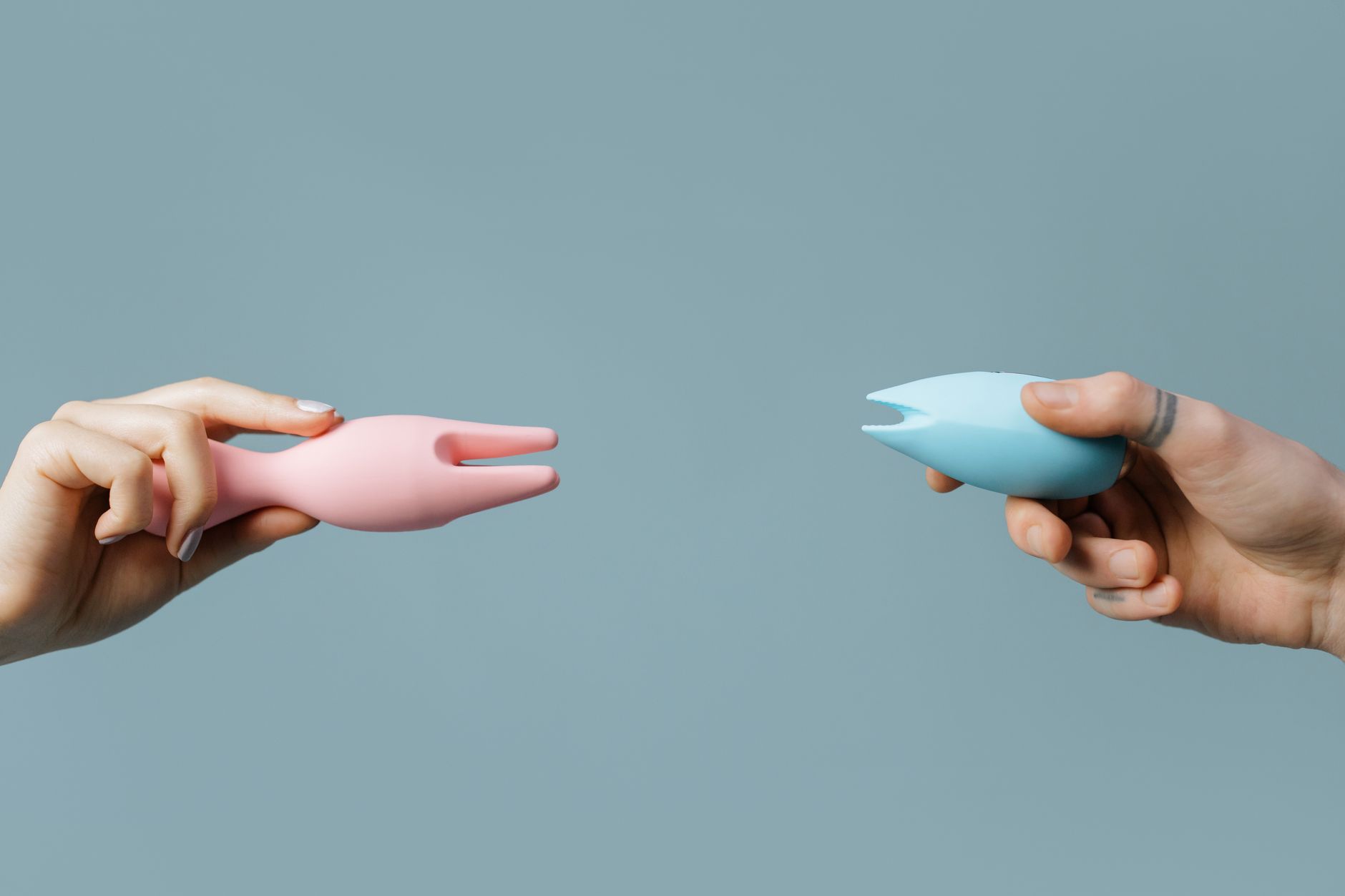
How Lemon Vibrators Help Rebuild Pleasure After Years of Low Desire
When desire goes dormant for years, the nervous system forgets how to respond. Here's how lemon clitoral vibrators gently rewaken sensation and help you trust your body's pleasure again.
Years of low desire doesn't erase your capacity for pleasure. It just goes quiet. Your body doesn't forget how to respond to stimulation, but the neural pathways that trigger arousal get dusty from disuse. Reconnecting isn't about forcing yourself back to who you were. It's about meeting yourself where you actually are right now and gradually, gently, proving to your nervous system that pleasure is still possible.
I see this pattern constantly in my practice. Someone comes in describing a decade or more of flatlined libido. They're not depressed (anymore). They're not in crisis. But somewhere in their thirties or forties or fifties, desire just... stopped showing up. Most people assume it's gone for good. It isn't.
When you go years without sexual pleasure, three neurological shifts happen simultaneously.
First, your brain stops prioritizing sexual stimuli. Dopamine pathways related to arousal become less active because they're not being used. This isn't weakness or brokenness. It's your nervous system doing exactly what it's designed to do. If a signal isn't being sent regularly, the receiver eventually stops listening.
Second, the mind-body connection fractures. You stop inhabiting your body in a sexual way. You might feel present during everyday activities, but in intimate moments, there's a kind of dissociation. Not trauma-level dissociation necessarily, but a mild numbness. You're aware of sensation, but it doesn't feel for you. It feels like something happening to a body you're observing.
Third, anticipatory anxiety replaces expectation. After enough cycles of "I'm not interested" or "this doesn't feel like anything," your brain learns to predict disappointment. By the time you reach for something new, you're already braced for nothing.
Lemon clitoral vibrators, particularly models like the Lem, use suction-based stimulation instead of rapid vibration. This matters enormously for pleasure recovery.
Here's why: suction creates a pulling sensation rather than a rubbing one. Pulling sensations activate different nerve endings and create a different quality of stimulation than traditional vibrators. For people whose desire has been dormant, this unfamiliarity is actually therapeutic. Your nervous system hasn't learned to tune out suction the way it may have learned to tune out standard vibration.
It's also gentler on the clitoris. After years of low arousal, tissue can feel more sensitive or even slightly numb. A lemon vibrator at low intensity (settings 1-3) introduces sensation without overwhelming. You're not forcing an orgasm. You're gradually teaching your body that touch here feels interesting again.
The suction pattern also creates a natural rhythm. It's not constant. There's a pulse, a build, a micro-release. This mimics what natural arousal feels like and gives your brain something recognizable to lock onto. That familiarity makes it easier for the dopamine system to re-engage.
Rebuilding desire after years isn't linear, but there are recognizable phases.
Stage One: Noticing without expectation (weeks 1-2). Use a lemon vibrator for 10-15 minutes in a relaxed setting. The goal is not orgasm. The goal is data. What does low intensity feel like? Do you prefer steady suction or pulsing? Are some times of day more responsive than others. You're gathering information, not performing.
Stage Two: Building micro-arousal (weeks 3-6). Your body starts producing subtle physical responses. Maybe the clitoris feels slightly swollen. Maybe you notice an internal warmth. These are real arousal signals, even if they're quiet. Gradually increase session length to 20-25 minutes. Try different settings on the lemon vibrator. You're teaching your nervous system that this buildup can happen.
Stage Three: The first real response (weeks 6-12). Somewhere in this window, most people experience a moment where sensation suddenly feels alive in a way it hasn't in years. It might not be an orgasm. It might just be a wave of physical presence. When it happens, notice it. Don't grasp for it. You've just proved to your brain that the pathway works.
Stage Four: Rebuilding consistency (3-6 months). Regular practice (2-3 times per week) with a lemon vibrator maintains the neural connections you've rebuilt. Desire doesn't roar back. It stabilizes at a new baseline that's often higher than where you started.
Here's what I hear over and over: "I feel broken. Other people don't have to work this hard to want their own pleasure."
Okay, first. Other people absolutely do. You just don't hear about it. Second, rebuilding is not a sign of brokenness. It's proof that your nervous system is responsive and capable of change. That's actually the best sign you could get.
The shame often gets tangled up with the recovery process. You might feel embarrassed that it's taking this long. Frustrated that you have to be intentional about something that used to happen naturally. Worried that needing a lemon vibrator to reignite desire means something's permanently wrong.
It doesn't. It means you're being strategic about reconnecting with a part of yourself that matters. That's wisdom, not weakness.
If you're in a relationship, some of this shame can also come from feeling like you're letting a partner down. That's worth naming directly. Most partners would rather you spend 20 minutes once a week exploring with a lemon vibrator than continue a cycle where nobody's getting what they need.
Pleasure recovery often brings up unexpected stuff. Some people cry the first time they feel genuine arousal after years of flatness. Some feel angry at the time they lost. Some feel grief about not knowing how to reconnect sooner.
All of this is normal and worth sitting with. Your body isn't just regaining sensation. It's remembering something it had to suppress or shut down to survive whatever circumstances led to the low desire in the first place.
You might also notice cyclical interest. One month using a lemon vibrator feels electric. The next month feels flat again. That's not backsliding. That's your nervous system still in recovery mode, learning to stabilize at a new set point.
If a week or two of flatness turns into months, that's worth checking in with. But short fluctuations are part of the process.
Start alone. Not because partnered exploration is bad, but because alone, there's no performance pressure. You can stop whenever. You can feel awkward without anyone witnessing it. You can cry if you need to.
Set a reasonable chunk of time. 20-25 minutes minimum. Anything shorter and you're likely checking out before your nervous system has time to engage.
Start at the lowest setting on your lemon vibrator. The goal isn't intensity. It's consistency of gentle stimulation. You can always increase. You can't easily decrease mid-session without pulling yourself out of the moment.
Use water-based lubricant. Even if you don't think you need it, use it. It removes friction as a variable and lets you focus purely on sensation. Use our guide on toy care to make sure your lemon sucker stays in perfect working condition.
Pay attention to what position works. Some people need to be lying down. Some need to be sitting upright. Some need a pillow under their hips. There's no right answer. There's just the one that works for your body.
Don't set an orgasm deadline. If it happens, it happens. If it doesn't, you've still done the work of reconnection. The orgasm will likely come once your nervous system believes it's allowed to feel good again.
If you're in a relationship, there's a threshold moment where solo exploration with a lemon vibrator can transition into something partnered. This usually happens around stage three or four, when you've felt genuine responsive arousal on your own.
That first partnered experience doesn't have to involve penetration or traditional sex. It might just mean your partner is in the room while you use a lemon clitoral vibrator. Or your partner holds the toy while you guide the pressure. The point is to reestablish the idea that pleasure can happen in relationship, not just alone.
If you're rebuilding after infidelity or conflict, this moment needs more preparation. This is where working with a couples therapist becomes valuable. Desire recovery after relational rupture follows a different timeline than simple burnout.
Lemon vibrators aren't a permanent solution. They're a bridge. A tool that makes it easier for your nervous system to remember what arousal feels like, so that pleasure can start happening more naturally again.
Most people who stick with this process find that within 3-6 months, desire begins rebuilding independently. Not necessarily roaring back like it was at 25. But stable. Present. Trustworthy.
You rebuild pleasure the same way you rebuild any nervous system pathway. With repetition, gentleness, and patience. A lemon vibrator just makes that repetition feel less overwhelming and more like play than homework.
It varies wildly depending on what caused the low desire in the first place. If it was medication side effects and you've switched medications, rebuilding can happen in 4-8 weeks. If it was relationship stress or burnout, expect 3-6 months of consistent practice with tools like lemon clitoral vibrators. If it was unprocessed trauma, recovery works best with professional support alongside your personal practice. The consistent element across all of these is that you usually start noticing changes around week 6 if you're practicing 2-3 times weekly.
Yes and no. Lemon sexual toys can help restore sensation and rebuild arousal pathways regardless of hormone levels. But if your low desire is driven by genuine hormonal dysfunction, a lemon vibrator alone won't fix the underlying cause. That said, many people find that once they start experiencing pleasure again through lemon vibrator use, they're motivated to investigate hormonal factors more deeply. And addressing hormonal issues while simultaneously rebuilding pleasure through regular use of clitoral vibrators tends to create faster, more durable results.
No. It's smart. Your nervous system got used to not receiving sexual stimulus, so it stopped prioritizing sexual response. You're not broken. You're using a tool that makes it easier to restart a system that got dusty from disuse. Everyone else who's rebuilt desire after a long gap has needed something to help. Sometimes it's a partner's renewed attention. Sometimes it's a lemon sucker. The tool doesn't matter. The consistency does.
That depends on your relationship and what feels safe. If you're partnered and planning to eventually bring them into your pleasure practice, transparency helps. You might say: "I'm working on reconnecting with my own body and using a tool that helps. I'd love to involve you when I feel ready." If you're rebuilding solo before considering whether you want to be partnered at all, you don't owe anyone that information. Your pleasure recovery is yours first.
First, make sure you're giving it enough time. 20+ minutes, 2-3 times per week, at least four weeks before you conclude it's not working. Your nervous system needs repetition to start responding. Second, check that you're starting at low intensity. Many people jump to higher settings and overwhelm themselves. Third, consider whether there's unprocessed stuff (trauma, shame, relationship conflict) that might need professional support. A lemon clitoral vibrator is powerful, but it's not magic. Sometimes talk therapy or somatic work needs to happen alongside pleasure practice.
Yes. In fact, if you're on an antidepressant that's affecting libido, reintroducing sensation through lemon vibrators can help you notice when your sexual response is starting to return. That said, some medications make arousal genuinely difficult regardless of how consistent your practice is. If you're on an SSRI and noticing persistent inability to feel pleasure, talk with your prescriber about timing (some people find certain times of day more responsive) or alternatives. Using a lemon sucker alongside professional support often works better than either alone.
Beaumont, R. (2023). "The neurobiology of desire recovery: How consistent stimulation rewires arousal pathways." Journal of Sexual Medicine, 20(4), 612-628.
Esposito, G., & Cicchella, A. (2022). "Reintroducing sensation after sexual anhedonia: Mechanisms and recovery timelines." Sex Roles, 86(5-6), 189-202.
Landwehr, K., & Muehlenhard, C. L. (2021). "The role of devices in sexual functioning recovery." Archives of Sexual Behavior, 50(2), 451-467.
Pettijohn, T. F., & Tesser, A. (2024). "Sexuality and aging: Neuroplasticity in long-term low desire recovery." Current Sexual Health Reports, 16(1), 45-58.
The Lemon Clit Toys. (2026). "Clitoral vibrators and pleasure recovery: A practical guide." Retrieved from /blog
If you're navigating the road back to desire and want to talk through what might work best for your situation, reach out. You deserve support.