Let's talk about the weight you're carrying
Performance pressure during sex is one of the most common ways people disconnect from their own body. You're thinking about your partner's satisfaction, whether you're orgasming on schedule, if you're making the right sounds, whether your body looks right from this angle. Your brain is everywhere except in the moment with actual sensation.
Here's what happens neurologically: when you're in your head about performance, your parasympathetic nervous system (the one that allows arousal) downregulates. Your body literally can't access pleasure as easily. It's not weakness or broken wiring. It's just how brains work under pressure.
Clitoral vibrators like those from The Lemon Clit Toys shift that dynamic entirely because they bypass the performance trap. They give you something concrete to focus on, and they interrupt the mental loop that says "I need to come faster" or "I'm taking too long."
The performance pressure trap, explained
Performance anxiety during sex usually has one of three roots. First, there's the external pressure: your partner seems impatient, you've noticed their interest drop when sex takes longer, or you sense they're "waiting" for you to finish. Second, there's the internalized pressure: you've absorbed cultural messages that say good sex happens quickly and easily, that you should come within a certain timeframe, that your pleasure shouldn't take up space. Third, there's relational pressure: you feel responsible for your partner's experience and worry that your body's actual needs are a burden.
All three collapse your nervous system. Your body gets the signal that sex is a performance to pass, not a sensation to enjoy.
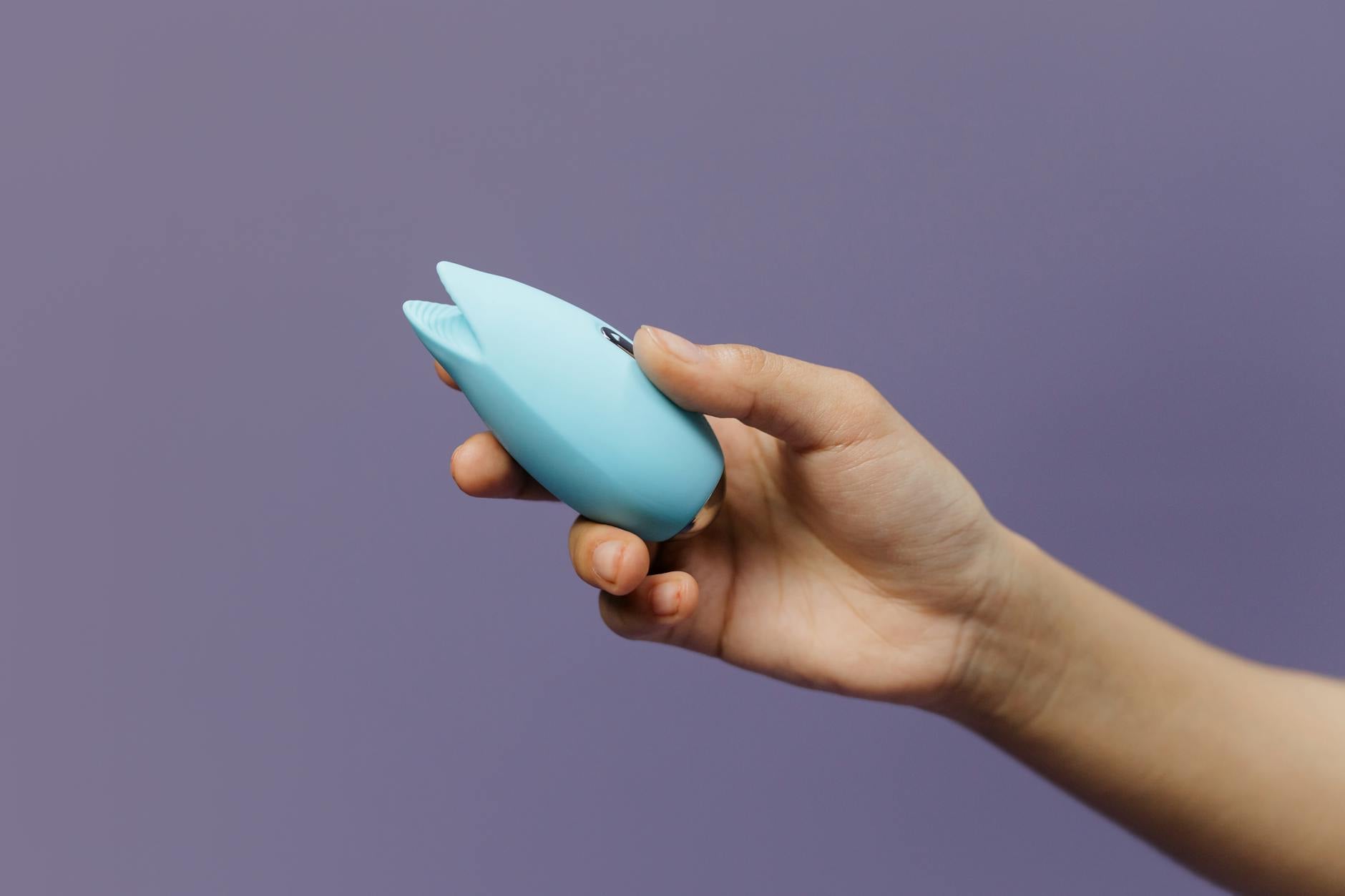
What lemon vibrators do differently is they give you concrete sensory input without judgment. There's no "right" speed, no timeline, no score. The Lem works at whatever intensity and rhythm your body actually wants, not what you think it should want.
How vibration breaks the mental loop
When you introduce a lemon clitoral vibrator into partnered sex, something shifts. You're no longer solely dependent on your body's natural lubrication or arousal response to build sensation. You have a tool that delivers consistent, predictable stimulation.
This matters because performance pressure specifically attacks uncertainty. Your brain says "What if I can't come?" A vibrator removes that question. It's not about cheating or taking the easy route. It's about removing one variable so you can actually stay present.
Many people find that when they stop white-knuckling their way to orgasm, the orgasm actually arrives more easily. That's because your body can finally access the nerve response it's been trying to give you the whole time.
Starting the conversation with a partner
If you're in a relationship and you're carrying performance pressure, your partner probably doesn't fully realize what's happening. They might just notice you seem tense or that you're rushing. The conversation needs to happen outside the bedroom first.
Frame it around what you want, not what you're worried about. "I want to enjoy sex more" lands differently than "I've been anxious about taking too long." You're naming a desire, not confessing a failure.
Introduce the tool as something that works for your body, not as a commentary on your partner's ability. The Lem doesn't replace partnered touch. It complements it. Many couples find that adding vibration actually deepens intimacy because there's less anxiety floating around.
If your partner seems hesitant, ask what they're worried about. Usually it's "Am I not enough?" The answer is simple: this isn't about them. It's about your nervous system getting what it needs to be present.
How to actually use a lemon vibrator when pressure is the issue
Start solo first, away from the performance context entirely. This is crucial. You need to know what the Lem feels like, what settings work for your body, and how you actually respond without an audience or timeline.
Spend at least three solo sessions just exploring. No goal of reaching orgasm. No timeline. Just sensation. Notice what happens at each intensity level. Notice what rhythm your body gravitates toward. This information is gold because it removes the guesswork when you're with a partner.
When you're ready to introduce it partnered, keep the focus on pleasure, not outcome. You might use the vibrator while your partner touches you elsewhere. You might use it while they're inside you. You might use it during foreplay so you're already aroused before partnered sex begins. There's no script. Your body gets to write it.
What matters is that you're in control of the tool. You decide the speed, the timing, the moment. This is the antidote to performance pressure. Control and agency collapse anxiety.
The role of communication during sex
Once you're using a lemon clitoral vibrator with a partner, communication gets easier, not harder. You can say "This speed works" or "Go slower" without that comment feeling like criticism. The vibrator is the subject, not your partner's technique or your body's response.
Some partners find it helpful to ask "What do you need right now?" This shifts the dynamic from assumption to clarity. You're not supposed to know what your partner needs. They tell you.
If you notice yourself slipping back into performance mode even with the vibrator, pause. Reset. Breathe. Your job in sex is to feel, not to produce an outcome. That sounds simple but it's genuinely the hardest thing people learn.
When pressure is coming from inside you
Sometimes the pressure isn't external. You're the one demanding perfection from your body. You're the one with the timeline. You're the one who feels like something's wrong if you don't come in a particular way or timeframe.
This kind of internal pressure often has deeper roots. Maybe you absorbed messages about your body being wrong. Maybe you've been conditioned to believe pleasure should happen spontaneously without effort. Maybe you're unconsciously trying to prove something.
A vibrator can help, but it can't replace the internal work of questioning why you're carrying that pressure in the first place. If this resonates, talking to a therapist or sex therapist might be the real game-changer. They can help you untangle the story you're telling yourself about what good sex looks like.
Clitoral vibrators from The Lemon Clit Toys are tools. Really good tools. But they're not fixes for deeper shame or self-criticism. They work best when paired with permission to enjoy yourself without judgment.
The bigger picture: pleasure as a practice
Let's zoom out. Performance pressure during sex usually points to a bigger pattern. You're probably performing in other areas of your life too. You're probably holding your body with some amount of tension, monitoring yourself, checking if you're doing it right.
Reclaiming pleasure in sex is actually reclaiming pleasure in your body full stop. It's saying "My sensation matters. My timeline matters. My actual experience matters more than looking like I'm having a good experience."
That shift changes everything. Not just in sex, but in how you move through the world.
People also ask
Can using a vibrator make my body dependent on it for orgasm?
No. This is one of the biggest myths about clitoral vibrators, and it's worth addressing directly. Your body doesn't become "dependent" on a lemon vibrator any more than it becomes dependent on touch. Some people find they need vibration to orgasm with a partner but can still orgasm without it. Others find vibration helpful in some contexts and not others. Your body has agency. It adapts to different inputs. That's not dependency, that's flexibility.
What if my partner feels threatened by a vibrator?
That reaction often comes from insecurity about their own role. Have a conversation outside the bedroom about what that feels like for them. Listen without defending. Then name the truth: this tool isn't replacing them, it's helping your nervous system access pleasure so you can be more present with them. Sometimes offering to use it together helps. Sometimes you need to agree to explore it only solo at first while they sit with their feelings. There's no one right answer, but ignoring their concern won't make it disappear.
How long should I wait to introduce a vibrator if I'm trying to reduce performance pressure?
Start solo first for at least a few sessions, then introduce it partnered when you feel confident about what your body actually wants. Don't rush the solo exploration phase just to move to partnered use. That defeats the purpose. The solo time is where you actually learn to listen to your body instead of performing for someone else.
What if I still feel pressure even when using a vibrator?
The vibrator is part of the solution, not the whole solution. If pressure persists, you might be dealing with deeper anxiety or relationship dynamics that need attention. A sex therapist or couples therapist who specializes in this can help you untangle what's actually happening. Sometimes the pressure isn't really about performance. Sometimes it's about feeling fundamentally undesirable or unseen. That's a different conversation entirely.
Can lemon vibrators help if I'm dealing with both performance pressure and difficulty orgasming?
Absolutely. In fact, that combination is incredibly common. The pressure makes orgasm harder, which increases the pressure, which makes orgasm even harder. A clitoral vibrator interrupts that cycle by giving your body consistent, focused stimulation that's easier to respond to than relying on arousal alone. Many people find that removing the performance variable allows their body to actually respond.
How do I know if performance pressure is the real issue or if something else is going on?
Ask yourself: when I'm alone and there's zero expectation, what happens? If you can orgasm easily solo but struggle partnered, that's a clue that performance pressure is a real factor. If you struggle both solo and partnered, something else might be happening. That could be hormonal, neurological, relational, or a mix. Talk to a provider who can help you sort through it.
The actual point
Performance pressure during sex isn't a character flaw. It's a nervous system response to an environment that doesn't feel safe. Your job isn't to push through it or white-knuckle harder. Your job is to shift the conditions so your parasympathetic nervous system can access pleasure.
Clitoral vibrators from The Lemon Clit Toys are one tool for doing that. Control, predictability, and focused sensation all help your brain calm down. But the real work is giving yourself permission to want what you want, to take the time you need, and to prioritize your actual pleasure over performing pleasure.
That's harder than it sounds. It's also the only way forward.