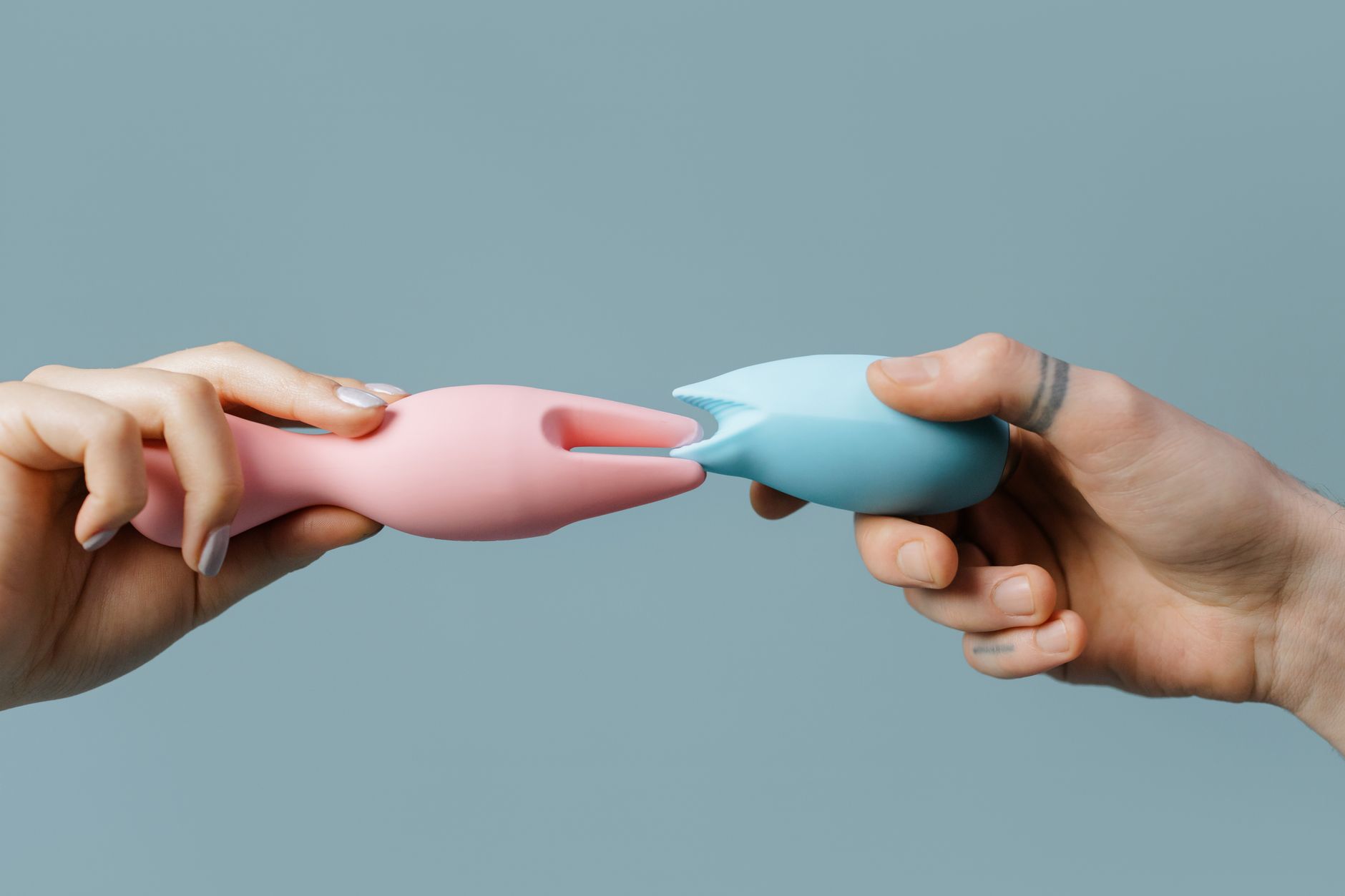
Why Lemon Vibrators Feel Different When Rebuilding After Postpartum Recovery
Your body isn't broken. It's different. Here's what changes after pregnancy, why your lemon vibrator might feel unfamiliar, and how to reconnect with pleasure at your own pace.
You grew a human. Your body is not the same. And that's not a failure. It's just information you need to have before you pick up a lemon vibrator again and wonder why everything feels weird.
Postpartum recovery is treated like a checkbox. Six weeks cleared by your doctor, and you're supposed to just... resume. Resume what, exactly? The pleasure you felt in your pre-pregnancy body? The energy you had before you spent nine months adapting to someone else using your organs as a jungle gym? The desire that didn't evaporate while you were leaking from seven different places?
If you gave birth vaginally, your vaginal and pelvic floor tissues are genuinely different. They're not damaged. But they are changed. The vaginal opening is wider. The tissues are softer, more fragile. The pelvic floor muscles have been stretched and, if you tore or had an episiotomy, they've been repaired. That repair is real scar tissue.
Tissue sensitivity shifts. Your nerve endings might feel more reactive or, paradoxically, more numb in spots. The skin may feel tender or hypersensitive. If you're breastfeeding, prolactin is suppressing your estrogen, which means your vaginal tissue is thinner and drier than it was pre-pregnancy. (This is also true if you're not breastfeeding but still in the early postpartum phase.)
Your clitoris itself didn't change structurally. But the tissue around it did. That changes how stimulation registers.
If you had a C-section, the vaginal tissue didn't stretch the same way. But you still have the hormonal shift, the abdominal scar pulling on your pelvic floor, and the fact that your whole core was cut through and is still knitting back together.
Both paths lead to the same truth: stimulation feels different because the tissue receiving it is different.
You pick up your lemon vibrator at the familiar pattern and angle. It doesn't hurt, exactly. It just... doesn't feel like it used to. Maybe it feels too strong. Maybe it feels muted. Maybe the vibration frequency that used to make you come in three minutes now feels irritating.
This happens because:
The surface area is more sensitive. Lemon vibrators, with their suction-based design, apply gentler broad-stroke stimulation than a traditional wand. Early postpartum, this can feel jarring or overstimulating to tissue that's already tender. Your nervous system is hypervigilant. It perceives touch differently.
Lubrication is genuinely lower. If you're breastfeeding, your estrogen is bottomed out. Your body isn't making the natural lubrication it used to. Water-based lube helps, but it's not the same as your body's own production. The friction feels different. The glide isn't smooth.
Your pelvic floor is guarding. Even if you're not consciously tense, the muscles around your vagina are in a protective state. They've been through something. Anxiety about pain, even if pain doesn't actually happen, can lock those muscles up. A lemon vibrator might trigger that guarding response, making the experience feel tighter and less pleasurable.
Your brain is still in caretaker mode. You're waking up multiple times a night. You're touched out from a baby who uses your body as food and comfort. Your cortisol is elevated. Your nervous system is stuck in sympathetic overdrive. Pleasure requires a parasympathetic state. You're not there yet. Your vibrator can't fix that neurologically.
Your body grew and birthed a human. That is objectively wild. But it also means your body isn't entirely yours anymore, at least not in the way it was. If you're nursing, you're a food source. If you're bottle-feeding, you're still being touched constantly by a small person who has zero concept of boundaries.
The idea of touching yourself for pleasure can feel like one more extraction. One more person using your body. That's not a libido problem. That's a boundary problem. And it's completely real.
Some people also experience postpartum mood changes that directly suppress desire. Postpartum depression and postpartum anxiety are not rare and not signs of weakness. They affect pleasure. If you're feeling flat or anxious, that's not something a lemon vibrator solves. That's something you address with a therapist, your doctor, or both.
Then there's the grief. Your pre-pregnancy body is gone. That deserves to be mourned, even if you're grateful for what you created. Even if you wanted the baby. Loss is loss.
Lower your expectations of intensity. You're not chasing the orgasm you used to have. You're exploring what pleasure feels like in this new body. Some people find that early postpartum orgasms are gentler but actually more satisfying because there's less pressure attached. Others don't come at all for months, and that's fine too. The goal isn't the orgasm. The goal is reconnection.
Use more lube than you think you need. Seriously. Slathering silicone or water-based lube on your lemon vibrator and your vulva isn't cheating. It's physics. Thin tissue needs it. Your pleasure depends on it. Make it normal.
Start with external play only. No penetration, no internal pressure. Let your lemon vibrator focus on your clitoris and the external vulva. This gives your pelvic floor permission to release some of that protective tension. No stakes, no goal, just sensation. You might be surprised how much pleasure is available just on the surface.
There's no timeline. Some people feel ready at eight weeks. Some take six months or longer. Both are normal. When you do feel ready to explore deeper sensation, here's what shifts:
Start with lower vibration patterns. The Lem's pattern range is wide. Begin at 1 or 2, not your old starting point. Your tissue will let you know if it can handle more. There's no rush.
Listen to your pelvic floor. If you feel tension or guarding, pause. That's information. Tension during pleasure isn't something to power through. It's your body's way of saying it's not ready yet.
Consider working with a pelvic floor physical therapist, especially if you tore or had an episiotomy. They can assess your scar tissue and give you targeted exercises to help rebuild sensation and function. This isn't about going to the gym. It's about proprioception and healing.
If you're rebuilding pleasure with a partner present, separate the conversation from the pressure. "My body feels different" is not the same as "I'm not attracted to you" or "Something is wrong with us." Your partner might be interpreting your reluctance as rejection when it's actually just... physiological reality.
Here's a framework: "I'm still healing. My body is different. I want to explore pleasure again, but on a slower timeline and in ways that feel safe to me right now. That doesn't mean I don't want you. It means I need patience and communication." That's the honest conversation.
Solo pleasure first isn't selfish. It's strategic. You learn what your postpartum body likes before you add another person's expectations into the mix.
Postpartum recovery isn't linear. Some days your lemon vibrator will feel amazing. Other days it will feel like nothing at all. Both are okay. Your pleasure capacity will return, but it might look different. The intensity might shift. The frequency might change. Your body might surprise you.
What matters is patience with yourself. Your body did something extraordinary. Give it time to settle. Give yourself permission to figure out what pleasure looks like now. The lemon vibrator will still be there when you're ready. And when you are ready, you'll find that rebuilding desire can be just as intimate and powerful as the original connection was.
Medically, most providers clear sexual activity at six weeks postpartum, assuming no complications. That said, medical clearance doesn't mean you feel ready. Your tissue might be sensitive for longer. Solo exploration with a lemon vibrator can begin whenever you feel emotionally and physically safe. Many people find the first few months involve external play only, with internal or deeper stimulation coming later. Listen to your body, not the calendar.
Numbness is common postpartum because hormonal shifts (especially if you're breastfeeding) thin the vaginal tissue and reduce blood flow to the genital area. Additionally, scar tissue from tearing or episiotomy can affect nerve sensation in specific spots. This usually resolves within a few months to a year as hormones stabilize and tissue heals. If numbness persists beyond a year, mention it to your doctor or a pelvic floor therapist.
Yes, absolutely. Breastfeeding doesn't prevent you from using a lemon vibrator. What does change is your estrogen level, which affects vaginal lubrication and tissue thickness. You'll likely need more external lubrication than you did pre-pregnancy. The sensation might feel different because of these hormonal changes, not because breastfeeding itself is a barrier to pleasure.
No. Pain is a stop signal. If your lemon vibrator causes pain, pause and adjust. Pain might mean you need more lube, a slower pattern, external-only play, or simply more time before your body is ready. It might also indicate a complication like infection or retained tissue. If pain persists across multiple attempts, talk to your OB/GYN. Pain during postpartum recovery isn't normal and shouldn't be pushed through.
Desire doesn't return on a schedule. It returns when your nervous system feels safe, when you're sleeping enough, when you're not touched out, and when you've processed the emotional and physical shifts of pregnancy and birth. Solo pleasure with a lemon vibrator can help kickstart that process. So can therapy, especially if you're experiencing postpartum depression or anxiety. Talking to your partner about realistic timelines helps too. Pressure to feel desire again actually suppresses it further.
Completely normal. Postpartum orgasms might feel softer, more localized, or just different in texture. Some people experience stronger orgasms. The variation depends on your hormones, your tissue changes, your mental state, and how much time has passed since birth. If you're still in the first year postpartum, expect sensation to shift month to month as your body rebalances.
Rebuilding desire after pregnancy is an act of self-care that nobody talks about clearly. Your body isn't broken. It's not defective. It's adapting. And you deserve space and patience to explore pleasure again, at whatever pace feels true for you. A lemon vibrator can be part of that journey. But only when you're ready, and only in ways that feel good.