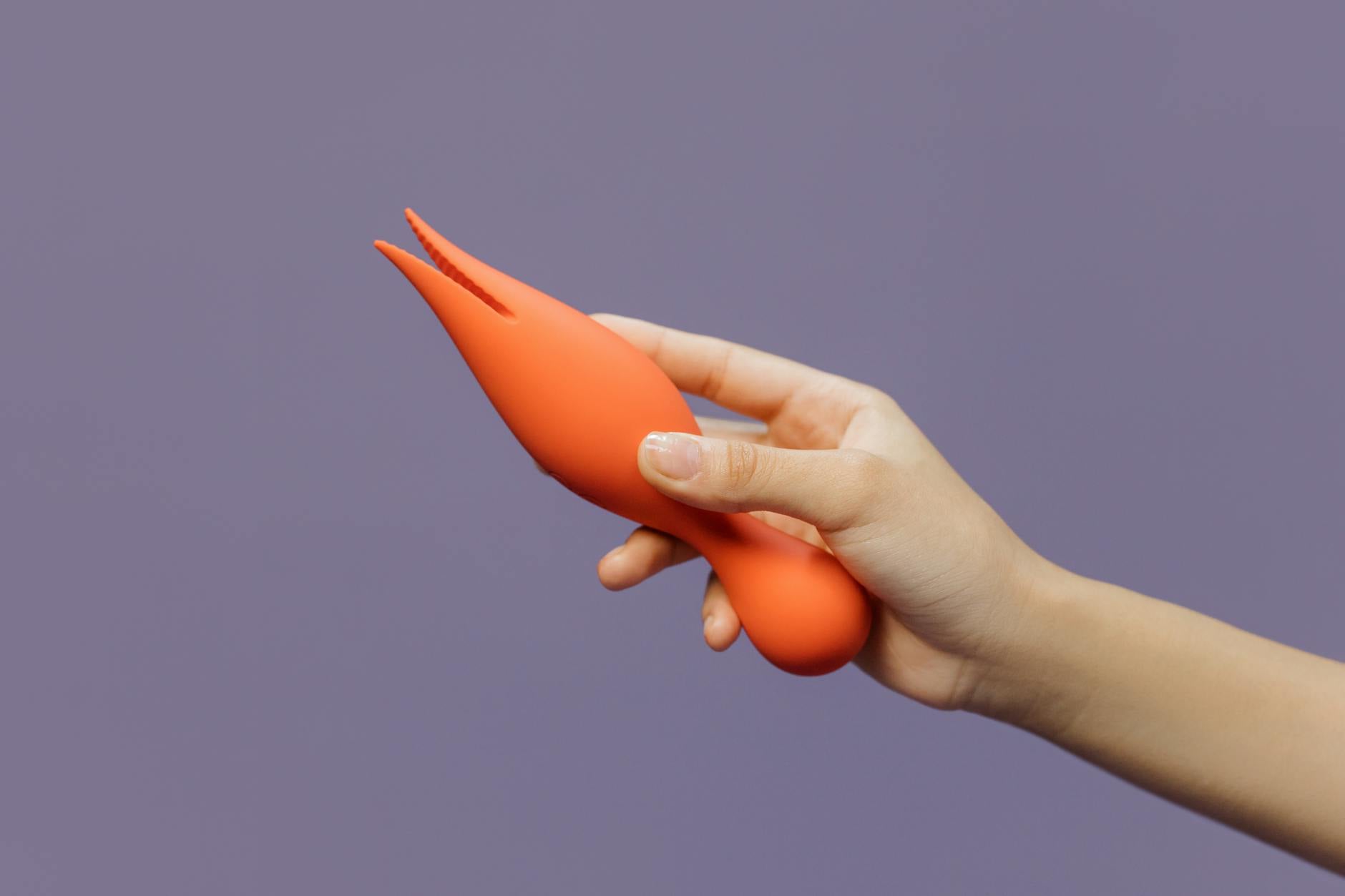
Why Lemon Vibrators Take Longer After Pelvic Floor Physical Therapy
Your pelvic floor PT rewired something fundamental. Clitoral vibrators feel different now. That's not a problem. Here's what's actually happening and how to work with it instead of against it.
It works. That's both the good news and the confusing news. After weeks or months of physical therapy, your pelvic floor is stronger, more flexible, and better coordinated. You can hold a pelvic floor contraction. You can release it fully. Your pain diminishes or vanishes. And then you reach for your lemon vibrator and something feels... off. Slower. Less direct. Like the intensity dial turned down.
You didn't lose sensation. Your vibrator didn't break. What happened is that your nervous system got recalibrated, and clitoral pleasure now operates on slightly different circuitry than it did before. Understanding why makes the adjustment feel less like loss and more like a legitimate upgrade.
Pelvic floor physical therapy doesn't just stretch or strengthen muscles. It retrains the entire pelvic nervous system. Your pelvic floor is wired with hundreds of nerve endings. When it's tight, restricted, or dysfunctional, those nerves send muddled signals. You feel pain, numbness, or a kind of electrical scrambling instead of clean pleasure.
Therapy teaches your nervous system to quiet that noise. Your pelvic floor learns to contract and release on command. The muscles themselves become more responsive. But here's the part nobody warns you about: as that nervous system settles into its new state, the way you experience touch in that region fundamentally shifts.
Before therapy, your pelvic floor might have been tight enough that vibration felt like it was cutting through resistance. It was direct and punchy because the muscles were braced. Now that they're relaxed and coordinated, the same vibration disperses across relaxed tissue differently. It's less of a breakthrough and more of a hum.
Think of it like the difference between playing music through a tense, compressed speaker versus a properly calibrated one. The tense speaker pushes the sound forward aggressively. The calibrated speaker distributes it more evenly.
Before therapy, your nervous system was in a state of guarding. Your pelvic floor held tension partly as a protective response. When stimulation happened, it had to pierce that tension. Now your body isn't guarding anymore. Stimulation doesn't have to break through a barrier. It can actually reach you more completely.
This also means arousal patterns shift. Some people find they need more time to build arousal now because their nervous system isn't in a state of pre-activation. The bracing was, in a weird way, doing part of the work. Now you're starting from a genuinely relaxed baseline, which is healthier but requires more intentional warm-up.
Your body doesn't adjust overnight. Most people I work with report that the first 2-4 weeks after finishing PT feel weirdest. During this window, lemon vibrators and other clitoral toys can feel less responsive than they did before therapy. Some people panic and think they broke something or that the vibrator is faulty.
What's actually happening is your nervous system is still learning how to interpret sensation in its new, unguarded state. Give it time. By week 6-8, most people report that sensation stabilizes into something richer than it was before, just less immediately sharp.
This recalibration is normal. It doesn't mean the therapy didn't work. It means the therapy worked so well that your entire pleasure blueprint is re-establishing itself on a healthier foundation.
If you're reaching for your lemon vibrator in the weeks following PT and noticing it takes longer to build sensation, try these adjustments.
First, extend your warm-up window. Before using any vibrator, spend 10-15 minutes on non-genital touch. This could be a massage, touching your inner thighs, or simply lying with your hands on your body. Your nervous system needs permission to turn on from a genuinely relaxed state. It can't be rushed.
Second, start at lower vibration settings than you used before. Your newly recalibrated nervous system will feel the lower frequencies more distinctly. Lemon vibrators have a range of patterns and intensities. Spend time exploring patterns 2-4 before jumping to the higher numbers. Often you'll find that pattern 3 at a medium intensity now creates the same satisfaction that pattern 6 did before therapy.
Third, experiment with different angles of contact. A pelvic floor that's relaxed and mobile may respond differently to direct vertical pressure versus diagonal or circular pressure. You might find that holding the vibrator at a slight angle feels more effective than straight-on contact.
Here's what makes the adjustment period worth it. Once your nervous system fully settles into its post-PT state, clitoral pleasure often becomes more nuanced and less frantic. Before therapy, many people experience pleasure as an on-off switch. Stimulation either works or it doesn't. After therapy, as your nervous system becomes more sophisticated, you often start to feel layers. You notice different sensations in different parts of your clitoris. Orgasms can feel more textured.
Many people report that, three to four months after finishing PT, their orgasms are stronger and more satisfying than they were before therapy, even though it took longer to get there during the adjustment window.
Your nervous system isn't broken during that transition period. It's upgrading.
If weeks have passed and sensation hasn't returned at all, or if you're experiencing new pain or numbness that wasn't there before finishing therapy, loop in your physical therapist. Occasionally, a patient needs one or two maintenance sessions to help their nervous system complete its recalibration. That's normal and fixable.
But most people don't need that. They just need to understand what's happening so they don't abandon their clitoral vibrator or assume something went wrong. Something actually went very right. Your body is just learning how to experience pleasure differently.
Most people notice stabilization around 6-8 weeks after finishing therapy. During the first 2-4 weeks, things often feel slower or less intense. This is temporary. By week 8, sensation typically reorganizes into something more nuanced and often more satisfying than before. If nothing has shifted by 10-12 weeks, check with your PT.
Yes, but give your nervous system a few days to decompress first. You've just spent weeks of therapy retraining your pelvic floor. Jumping straight back into vibrator use can confuse your newly recalibrated nervous system. Wait 3-5 days, then start with lower intensities and longer warm-ups than you used before.
No, and that's the point. Clitoral vibrators like the Lem will feel different because your nervous system is functioning differently now. It's not regression. It's evolution. Most people find that the new sensation is richer once they adjust to it, just less immediately intense.
Completely normal. Before therapy, your pelvic floor was often in a state of partial tension or guarding, which meant your nervous system was already partially activated. Now that you're starting from a genuinely relaxed baseline, it takes a bit longer to build arousal. This is actually a sign that your nervous system is working better, not worse.
Pain is not part of the adjustment period. If you're experiencing pain, stop and give yourself a few days rest. If pain persists, contact your PT. This could indicate that your pelvic floor is re-bracing in response to the stimulation, which sometimes happens and is very treatable.
Yes, but don't jump straight to maximum intensity. Instead, experiment with different patterns and moderate settings. Your nervous system may respond more vividly to certain patterns than others. Pattern variety often matters more than raw power during the post-PT adjustment period.